
Conference Headshots: How To Look Confident and Camera-Ready
Get conference headshots that look recognizably you. Learn what to wear, how to pose, and how AI makes conference-ready portraits fast and realistic.

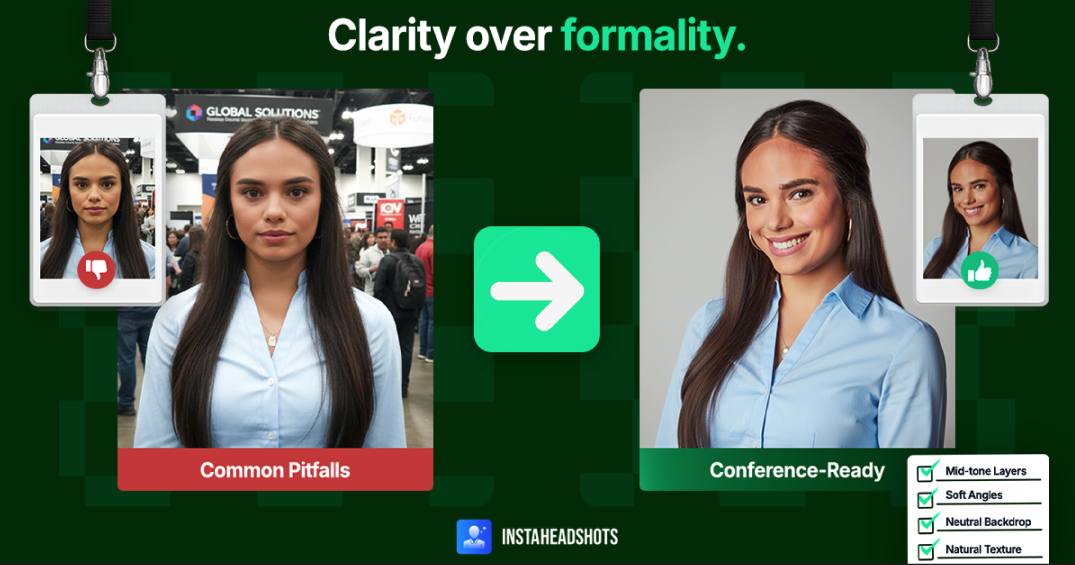
What to wear, how to pose, and which background works best for conference headshots.
Presenting at a conference is a meaningful career moment, which makes choosing the right headshot feel unusually high-stakes. Your photo shows up everywhere: LinkedIn, speaker bios, printed programs, event signage, and sometimes even massive screens inside a convention center. With that level of visibility, a headshot that looks washed out, stiff, or outdated can work against you.
The goal isn't formality for formality's sake. Strong conference headshots prioritize clarity, confidence, and approachability. You want to look like the person colleagues expect to meet in real life, not someone overproduced or overly retouched.
You don't need to schedule a full photo shoot to get a polished corporate headshot for your next conference.
Many professionals are skeptical of AI after seeing images that look smooth or unnatural, and that skepticism is fair. InstaHeadshots is built around realism, preserving natural skin texture, accurate lighting, and true-to-life clothing so your headshot looks credible, current, and unmistakably you.
TL;DR: Conference headshots appear across badges, schedules, and speaker materials, shaping how conference attendees encounter you throughout an event. The strongest images rely on preparation, camera-friendly wardrobe choices, clean backgrounds, and natural posing rather than rigid formality. With clear input photos, modern tools like InstaHeadshots make it easier to create consistent, conference-ready results without relying on a traditional photo shoot.
Why do conference headshots matter for your profession?
Conference headshots are business portraits used across corporate events, from event websites and printed agendas to signage and speaker listings. Even if you're not presenting, you may still need a headshot for your event badge, attendee profile, or trade show access.
First impressions happen fast. In a conference setting, your headshot often sets expectations before a conversation ever starts. A high-quality headshot helps people place you, remember you, and decide whether to engage—whether that's stopping by your trade show booth or choosing which session to attend.
Not every business headshot holds up in a conference environment. These images need enough clarity and flexibility to work across small badges and large-format displays. Clean color balance, soft natural lighting, and controlled contrast help ensure your headshot reads clearly wherever it appears.
How to prepare for conference headshots
As a busy professional, you're likely more comfortable in the office than in front of a camera. A small amount of preparation goes a long way toward looking natural and confident during a professional headshot session.
To get ready:
- Get enough sleep the night before so your face looks rested.
- Stay hydrated to help your skin appear even and healthy.
- Test outfit options ahead of time to find clothes that look polished and feel comfortable.
- Style your hair and makeup the same way you would for an important workday. If you have facial hair, give it a quick trim so it looks intentional.
- Review past photos to identify angles and expressions that feel most like you.
These steps apply whether you're booking professional photography or capturing input photos for an AI tool. If a traditional shoot isn't practical, InstaHeadshots offers a straightforward way to work from photos you already have.
What to wear for conference headshots
You don't need a full suit for your conference headshot if it doesn't align with your industry or personal brand. Instead, choose outfits with clean lines, intentional structure, and colors that look great on camera.
A finance leader might opt for a navy blazer paired with a soft white button-down. A creative or non-profit professional may lean toward a more relaxed look, such as a structured knit in green, purple, or burgundy. The goal is to look like yourself at your best, not overstyled for the context.
Fit and tailoring of your outfit
The camera exaggerates poor fit, highlighting details like wrinkles, bunching, and gaping collars. For your headshot, choose clothing that lies smoothly against your body without pulling or feeling restrictive. Before stepping in front of the camera, test your outfit while sitting, standing, and turning to make sure it holds its shape.
Necklines matter more than most people expect. Clean scoop necks and V-necks tend to photograph well, while deep V-necks can feel distracting or out of place in a professional context.
Best colors for conference headshots
Mid-tones like navy, charcoal, emerald, and plum tend to perform well on camera. They photograph consistently, flatter a wide range of skin tones, and create enough contrast to define your face without overpowering it.
Avoid neon shades and extreme black-and-white combinations, which can reflect light unevenly and wash out your features. Small patterns are also best avoided, as they often create a moiré effect—an unwanted visual distortion that makes patterns appear wavy or uneven on screens and printed materials.
Tips on how to pose for conference headshots
When taking a corporate headshot photo, aim to look relaxed and natural. Subtle posing and controlled expressions tend to highlight your features more effectively than rigid or exaggerated gestures.
Keep your shoulders down and away from your ears, and extend your chin slightly toward the camera to sharpen your jawline. A soft smile with engaged eyes usually reads better than a forced grin. Small adjustments, such as a slight head turn or gentle tilt, can add dimension without feeling staged.
Many corporate leaders default to crossed arms and a serious expression to signal confidence. In practice, this can come across as closed off or tense. A more open, neutral stance often communicates confidence more clearly and feels easier for viewers to connect with.
Best backgrounds for conference headshots
Choosing the right place to take professional headshots can be tricky, especially when time is limited. Neutral backgrounds in light gray, soft white, or charcoal work well across conference materials and keep the focus on your face.
Plain studio backgrounds aren't the only option for corporate event headshots. A lightly textured wall can add depth without feeling busy or visually noisy. Subtle environmental settings also work well for creative or tech roles, where a hint of context feels natural. Elements like greenery or a simple cityscape can add depth and still read cleanly at badge size or on large screens.
In-studio vs. conference-day booths vs. AI headshots
There are several ways to create conference headshots, each with its own trade-offs:
- Professional studio sessions: Photos are taken ahead of time with a professional headshot photographer in a controlled setting. Studio sessions offer predictable lighting and background options, but they require advance scheduling and a higher financial investment.
- Conference-day photo booths: Many events offer a professional headshot booth on-site, often during the first day of the conference. These booths are designed for efficiency and consistency, making them a practical option for large events with many speakers who need images quickly.
- AI headshots: With AI tools like InstaHeadshots, you can create new headshots without booking a session or traveling to a location. InstaHeadshots preserves natural skin detail, fabric texture, and realistic lighting, producing results that hold up alongside traditional studio headshots.
All three approaches can work well for conference use. The right choice depends on your timeline, budget, and how much control you want over the final image.
What should professionals in different industries prioritize?
Business photoshoots should reflect the expectations of your industry. Small choices in wardrobe, background, and expression can shape how your headshot is perceived in a conference setting.
- Law and finance: Choose deep neutral colors and structured layers. Calm, composed expressions read as steady and dependable.
- Healthcare: Soft tones like sage or dusty blue feel reassuring and help create a sense of ease.
- Tech: Relaxed colors, layered pieces, and textured knits strike a balance between polished and informal, allowing personality to come through.
- Consulting: High-contrast outfits paired with clean grooming help convey clarity and authority.
- Real estate: Warm tones and an engaging expression support visibility and connection with potential clients.
Common mistakes to avoid for conference headshots
Have a conference headshot session coming up? Avoid these common mistakes to ensure your image holds up across conference materials and display formats:
- Neon clothing: Bold colors can reflect on your skin, creating color contrasts that distract from your face.
- Busy patterns: Small or high-contrast patterns often create a moiré effect when your headshot appears on screens or in print.
- Heavy retouching: It's fine to touch up a temporary blemish, but aggressive editing can make an image look manipulated and less credible; viewers tend to be wary of doctored photos and less trusting of them compared with authentic images.
- Overly formal outfits: A suit or ultra-formal look can feel mismatched at more casual or industry-specific events.
- Outdated photos: Using a headshot from several years ago can create confusion and weaken first impressions.
Your conference headshot is part of your professional reputation
A conference headshot isn't just a checkbox. It's a working asset that shapes how people perceive you across schedules, signage, badges, and screens. When it's clear, current, and well-composed, it supports stronger introductions, smoother networking, and more confident first interactions throughout the event.
Today's tools give professionals more control over that outcome. InstaHeadshots offers a practical alternative to traditional event photography by producing realistic AI headshots that preserve your likeness and visual consistency. In about 15 minutes, you receive a full set of options—without the scheduling constraints or studio friction—so your headshot is ready when you are.
If you have a conference coming up and need a polished, realistic headshot without the hassle of a photo shoot, try InstaHeadshots today.
FAQs
What should I wear for conference headshots?Choose mid-tone colors, structured layers, and clean necklines that create definition without overpowering your face. These choices photograph reliably across different lighting setups and event materials, from badges to large screens.
What background works best for conference speakers?Neutral backdrops like light gray, white, or charcoal provide clean contrast and keep attention on your face. These also translate well across conference programs, speaker decks, and large-format displays.
Do I need a professional photographer for a conference headshot?A photographer can offer controlled lighting and guided posing, but it's not the only option. High-realism AI can now produce conference-ready portraits from clear, well-lit photos, making it easier to update your image without booking a session.
How should I pose for conference headshots?Keep posing to a minimal. Relax your shoulders, angle your body slightly, and maintain a natural expression. Small adjustments, such as extending your chin or turning your head slightly, help the image feel authentic and balanced.
Can I refresh my headshot quickly before a conference?Yes. AI headshots make it possible to update your portrait quickly when you start with a clear, well-lit photo. This makes it easy to align your headshot with upcoming speaking engagements or updated professional branding without waiting for a studio appointment.