
How to Do Makeup for Professional Headshots
Learn how to do professional headshot makeup that looks natural, polished, and true-to-life. Find tips for foundation, eyes, lips, and avoiding common mistakes.

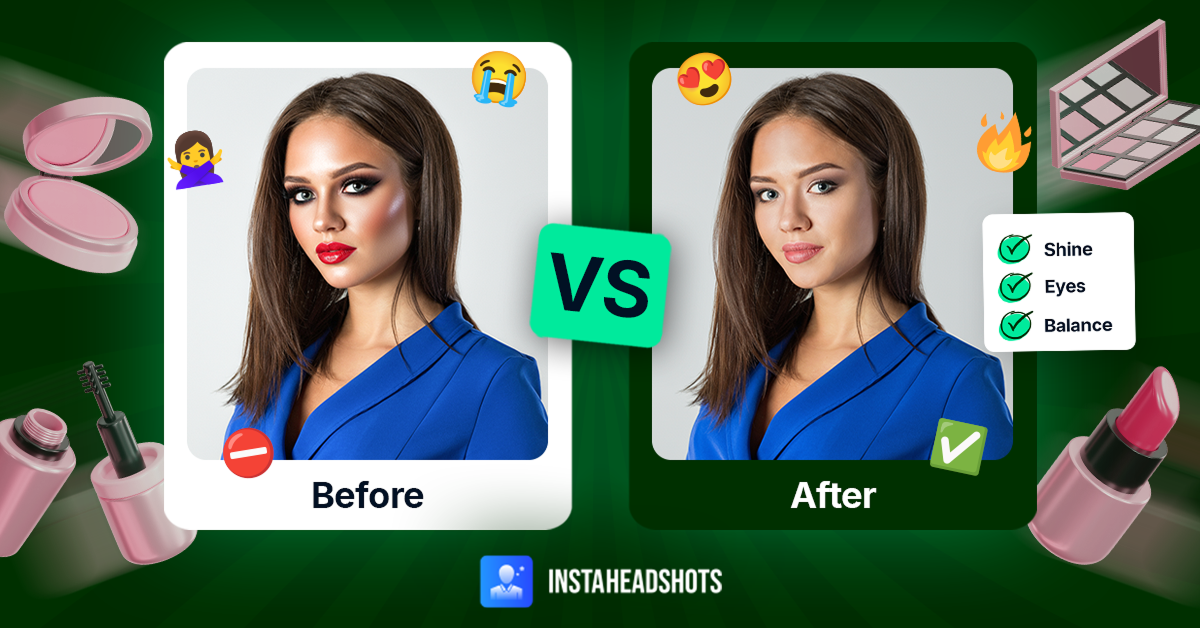
Discover how to do your makeup for professional headshots, with a complete routine and mistakes to avoid.
When taking a headshot, you want to look like your best self—and that includes a flattering makeup look. But choosing the right makeup for a photo shoot can be tricky, as it looks different on camera than in real life.
You might think you need to wear more makeup to cover up blemishes or shininess on camera, but that's not the case for professional headshots. A subtle, natural look enhances your best features while still looking like you on a great day in the office.
You don't need to look like a model to make a great first impression—potential employers, clients, and business partners want to see what you'll look like in real life.
AI tools like InstaHeadshots generate professional headshots with flattering makeup looks, providing an easy alternative to an in-person photo shoot. InstaHeadshots' algorithm prioritizes realism over perfection, preserving your natural skin tone and texture.
Let's break down how to do your makeup for a professional headshot, including a step-by-step routine, mistakes to avoid, and how to tailor your makeup to your industry.
TL;DR: Natural makeup looks are best for a professional headshot. Focus on enhancing your best features, rather than experimenting with bold looks.
Why makeup matters for headshots
Even with a high-quality camera, you look different in a photo than you do in real life. Softboxes flatten the dimensions in your face, and bright studio lights show inconsistencies in skin tone and texture that you wouldn't notice off-camera. Even bright natural lighting can emphasize shine on your T-zone.
Using makeup strategically counteracts shine and visible texture. But that doesn't mean applying thick, heavy layers. Instead, simply adjust how you use makeup to emphasize your features.
This is especially important if you're taking a headshot yourself with AI tools. For example, InstaHeadshots uses input photos to learn what your facial structure and skin tone look like. For a realistic final product, use natural-looking makeup in your input photos.
Essential principles for professional headshot makeup
Keep the following makeup principles in mind for a polished and professional look on camera.
- Opt for matte finishes over dewy products: A dewy foundation or highlighter can make you look sweaty under bright lighting.
- Neutral, muted colors: Shades like taupe, warm brown, or dusty rose subtly emphasize your features. Bold pigments or intense shimmer can look distracting in a professional setting, especially in industries like healthcare or nonprofits, where approachability is key.
- Blend your foundation into your neck: If your foundation doesn't quite match your natural skin tone, the camera will emphasize the difference. Blend your foundation thoroughly around your jawline and neck for a seamless look.
- Reduce shine: Apply powder to the forehead, cheeks, nose, and chin to maintain a matte finish, especially for corporate roles.
- Soft definition: Use natural eyeliner and brow shaping tools to define your features without overpowering them. Keep industry norms in mind here—for example, realtor or actor headshots often use stronger eye makeup to stand out.
Step-by-step: How to do makeup for headshots
You don't need a professional makeup artist to look great in your headshot. Here's a step-by-step breakdown to do your own makeup for photos.
Step 1: Prep your skin
Drinking plenty of water in the days leading up to the photo shoot, as hydrated skin looks smoother and plumper.
Before you do your makeup, cleanse your skin, then apply moisturizer for added hydration. Top it off with a skin primer, which helps your makeup go on evenly and stay on for hours.
Don't test new skincare products the day of the photo shoot, as they could cause breakouts or irritation.
Step 2: Foundation and concealer
Foundation will give your skin an even tone. Use a brush or a beauty sponge to apply and blend the foundation evenly.
When choosing a foundation, match the color to your neck and chest to keep your skin tone consistent. Stay away from 'glowy' or 'radiant' formulas, as these could look shiny on camera. Opt for 'matte' or 'natural matte' instead.
Next, apply light concealer under the eyes and around the nose to even out shadows. You can also use a small amount of concealer to touch up blemishes or scars.
Avoid thick, heavy layers, as this can make your skin look dry or unnatural on camera. InstaHeadshots preserves your skin's natural texture for a realistic but flattering look, so you don't need excess coverage.
Step 3: Eyes
Apply neutral eyeshadow tones—like brown, taupe, or beige—to make your eye color pop. Use a lighter color on the eyelid and a darker color in the crease, and blend thoroughly with a small brush.
Finish off your eye look with a light eyeliner close to the lash line and a touch of mascara. Depending on your skin tone, you might opt for grey or brown eyeliner. For a professional headshot, stay away from dramatic wings or smoky eyes—they can actually make your eyes look smaller.
For eyebrows, add some definition with a soft pencil or gel, and pluck away stray hairs. Avoid an overly sculpted look, which can look harsh on camera.
Step 4: Cheeks and contour
Sculpt your face with a light contour under your cheeks and on your temples. Cameras flatten these areas, so contour adds depth. Then, add a matte blush in a shade that suits your complexion, like peach, rose, or berry. Finish it off with a light coat of powder to prevent shine.
Step 5: Lips
Apply lipstick in a flattering neutral shade, such as rose, mauve, or soft pink. Stick to a matte or satin finish, and avoid gloss, as it creates glare.
If your favorite lipstick runs, use a lip liner to keep it in place. Lip liner also gives your lips shape and definition. However, overlining your lips looks unnatural, so use this product sparingly.
Common makeup mistakes (and how to avoid them)
More makeup doesn't necessarily look more professional. Stay away from these common headshot makeup mistakes:
- Too much highlighter: Wearing highlighter on camera is risky, as the lights can create blown-out spots on your cheeks or forehead. Instead, opt for a matte finish.
- Bold eyeshadow: Bright neons or metallics look harsh on camera and distract from your face. A toned-down neutral look is more flattering.
- Heavy contour: Too much contour looks like streaks, rather than natural shadows. Use a small amount of contour and blend thoroughly to soften the look.
- Mismatched foundation: The camera exaggerates contrast, so a good foundation match is key. Test multiple shades in-store to find one that matches your neck and chest.
- Overly sharp brows: Hard lines can make your natural expressions look more severe. Stick with a shade that's close to your natural hair color and keep lines soft.
Makeup cues for different industries
Makeup norms and expectations vary by industry—what's normal for one role might be wildly inappropriate for another. Here are some industry-specific makeup cues to guide you:
- Finance, law, and other corporate roles: Use a matte finish with soft blush and defined brows for a professional look.
- Real estate: Realtors benefit from more eye definition to stand out in thumbnails.
- Tech: Use a natural finish with soft, clean tones for an authentic look.
- Healthcare: Warm, low-contrast colors like dusty rose and taupe create an approachable look.
- Creative roles: Let your personality shine through—small pops of color can work if they're true to your personal brand.
Instead of changing your look for the camera, simply refine your everyday work look. Pair these makeup looks with a professional outfit and hairstyle to make a great first impression.
How lighting influences makeup choices
Lighting can dramatically change the way your makeup looks on camera. Here's how different types of lighting change your look:
- Softbox lighting: Studio lighting can make you look shiny, so stick to matte products.
- Natural window light: Taking photos in front of a window can wash you out, so add some soft blush and subtle eyeshadow for a balanced look.
- Outdoor lighting: If you're shooting in cool-toned lighting, you may need to wear warm blush and lip shades to balance your look.
How AI headshots handle makeup—and why realism matters
AI headshots provide a convenient alternative to in-person photo shoots. You may have seen AI headshots that look overly airbrushed or use unflattering colors. To avoid this, choose a tool that prioritizes realism and accuracy.
InstaHeadshots renders makeup as it appears in real life, without any plasticky filters or shine. The AI model preserves your natural skin tone and texture, while adding subtle, flattering makeup that looks true to you.
Create your best look for your professional headshots
Headshot makeup should make you look and feel your best, not like a different person. Focusing on natural tones and matte finishes will help you look polished and professional on camera.
Pairing thoughtful makeup choices with realistic AI tools can help you achieve quality professional headshots, fast. InstaHeadshots uses your real-life photos to create versatile headshots, with hundreds of options in just 15 minutes.
Try InstaHeadshots today for realistic professional headshots that make a great impression.
FAQs
What is the best makeup for professional headshots?
Natural, matte, and minimally defined makeup works best. Cameras emphasize shine and bold colors, so softer, neutral tones create a cleaner result.
Can I wear bold makeup for a headshot?
You can, but bold looks often overpower facial features. For professional roles, soft definition, matte finishes, and neutral tones appear more credible.
Should men wear makeup for headshots?
A touch of concealer, powder, or brow grooming can improve evenness and reduce shine—without looking like makeup.
How do I prep my skin before a headshot?
Hydrate well, moisturize, and avoid trying new products on the day of the shoot. Well-prepped skin reduces texture and helps makeup sit smoothly.