
Acting Headshots: Everything to Know
Learn what truly makes an acting headshot stand out, from outfit choices to expressions that book roles.

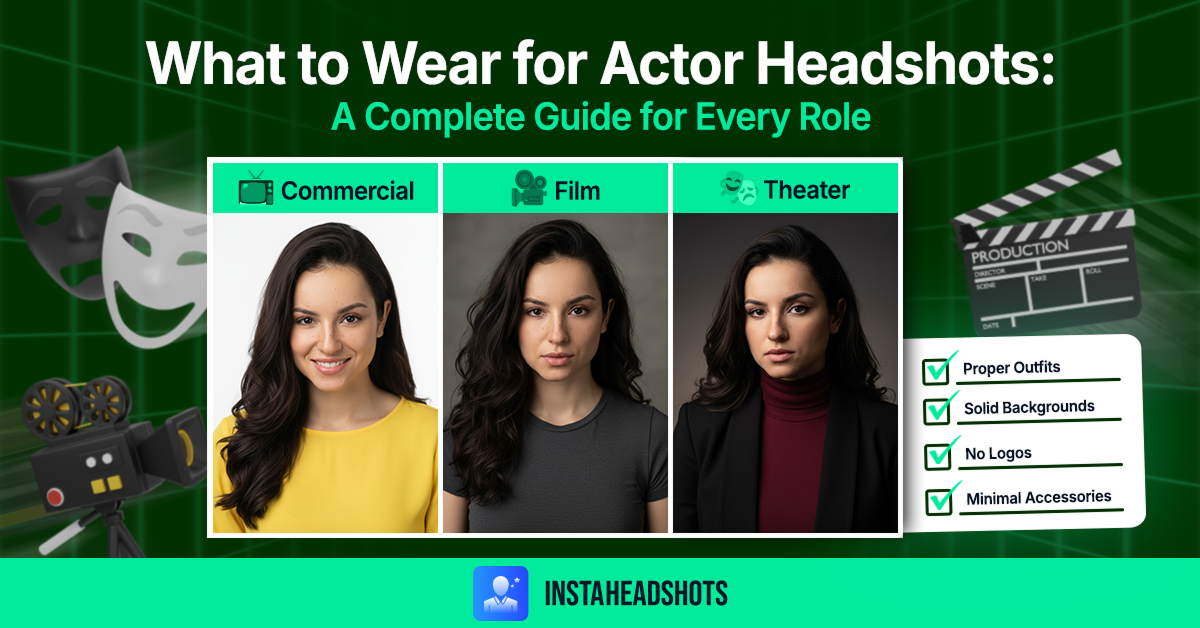
As an actor, your headshot is your first impression—your unofficial first audition—long before you walk into a room. It needs to look like you, read clearly in seconds, and show casting directors the energy you bring to a role. But choosing outfits, planning poses, and figuring out lighting can be overwhelming, especially when you’re busy learning lines.
You don’t need an expensive studio session to capture a great headshot. Casting directors care about authenticity, expression, and clarity, not dramatic styling or airbrushed “perfection.” A professional actor headshot that’s grounded and emotionally present stands out far more than something glossy or overproduced.
Realistic AI tools like InstaHeadshots now give actors a fast, credible alternative to traditional shoots. Unlike the plastic or uncanny AI results many actors have seen before, InstaHeadshots preserves natural skin tone, accurate lighting, and true facial texture to create high-quality headshots that look like you on your best day.
TL;DR: Every professional actor needs a headshot that shows who they are in seconds. Clean styling, natural expression, and good lighting matter most. AI tools like InstaHeadshots can help you get a realistic, casting-ready result without the hassle and cost of a studio session.
What acting headshots are (and why they matter)
Acting headshots are portraits of your head and shoulders. Casting directors, agents, and producers review them before auditions to quickly assess whether you might fit a role, which is why accuracy matters.
Unlike modeling photos or corporate headshots, acting headshots highlight natural expression and personality. Casting teams want an accurate read on how you look on a typical day, not a hyper-polished image that hides your range.
You also don’t need dramatic styling to stand out. Clean, distraction-free photos that make your face the focal point help directors know exactly what to expect when they meet you in person.
Stylistically, acting headshots should match the types of roles you’re pursuing. Warm, open expressions and soft lighting work well for commercial auditions, while subtle intensity fits dramatic theatre roles. Many actors maintain multiple headshot looks to cover different casting needs.
What to wear for acting headshots
Your outfit plays an important role in your photo. It should feel true to you, photograph well, and support your face as the focal point. You don’t need anything formal. Think clean, cohesive clothing that lets your expression do the work.
Opt for simple, flattering outfits in solid colors that complement your skin tone and hair. Don’t feel limited to black and white; those shades can sometimes wash you out or create a flat look. Neutrals like navy, brown, or grey work reliably, and rich jewel tones or soft pastels can add depth without stealing attention.
Avoid neon colors, loud patterns, logos, or oversized accessories. Instead of relying on a bold outfit to show personality, express it through your eyes, presence, and posing.
You can also choose what to wear based on the roles you’re targeting. For example:
- Navy T-shirts or button-downs for authoritative roles
- Neutral crew-neck tops for commercial castings
- Soft knit tops in muted tones for approachable, friendly roles
- A flattering V-neck for sophisticated, dramatic parts
Best outfit tips for women
When choosing an outfit for an acting headshot, stick to tops or dresses in solid colors with a flattering neckline. V-neck, scoop neck, or round cuts all work well—choose the one you feel most comfortable in. These shapes visually lengthen the neck and keep attention on your expression. Skip bulky or frilly necklines, since they pull focus from your face.
Choose colors that enhance your features and fit the tone of the characters you often play. A fitted slate-blue or grey top will create a grounded, commercial feel, and soft jewel tones or earth shades add subtle depth for film or theater roles.
Keep accessories minimal. Small, simple jewelry adds a polished touch without stealing attention. Natural hair and makeup photograph best and let your personality and presence lead.
Best outfit tips for men
Male actors should aim for outfits that feel natural and comfortable. If something feels forced or out of character, skip it.
Fitted button-downs or lightweight sweaters work well and keep the frame clean. Solid-colored layers, like a denim jacket or casual blazer, add dimension without overwhelming the shot. Avoid neon colors, busy patterns, or accessories that compete with your face.
Choosing colors based on your skin tone
Select outfit colors that complement your skin tone and highlight your features on camera. Shades that align with your undertones tend to photograph more naturally and produce a clearer overall result.
For example, brighter tones can add warmth and dimension in a friendly commercial headshot, while deeper or softer shades may work better for actors with fair or muted coloring. Try a few options in front of a mirror before your photo session to see what feels most balanced.
It also helps to know whether you have warm or cool undertones. Warm skin pairs well with earthy or saturated tones, while cool skin looks great in soft neutrals and lighter pastels.
Outfits by headshot type (theater, commercial, film)
The types of roles you pursue can guide how you style your headshot session. Here’s how to match your look to common casting categories:
- Theatre: Choose deeper tones that add contrast and create a more dramatic, sophisticated feel.
- Commercial: Stick with bright, warm hues and soft textures to look friendly and approachable. Avoid necklines that feel sharp or overly structured.
- Film: Go for a neutral palette that feels grounded and realistic. Your headshot should make you look adaptable to a wide range of roles.
How to pose for acting headshots
Posing for a professional headshot is a chance to use your acting skills in a quieter, more controlled setting. Skip exaggerated expressions or rigid body positioning—subtle shifts photograph best, and your eyes should carry most of the emotion.
Even if you’re comfortable performing, still photography can feel unfamiliar. Spend a few minutes practicing in the mirror or taking quick selfies to see which expressions feel natural and read clearly on camera.
Try these tips for relaxed, believable posing:
- Release your jaw to reduce tension in your face and neck.
- Aim for a soft, natural smile with energy in your eyes instead of a fixed grin. Thinking of a pleasant memory can help if smiling feels forced.
- Make small angle adjustments between shots rather than facing the camera straight on. A slight ¾ turn can be very flattering and make your photo more dynamic.
- Play with microexpressions (thoughtful, warm, curious) to let personality shine through without overacting.
Expression variations that impress casting directors
Casting directors respond to expressions that hint at character and emotional range. Try these variations based on common role types:
- Commercial roles: Warm, approachable smile
- Dramatic theater roles: Thoughtful intensity or grounded confidence
- Film roles: Neutral attentiveness or soft, subtle smile
How to avoid stiff or over-performed poses
A common challenge with theatrical headshots is avoiding poses that feel stiff or fake. If you tighten up in front of the camera, these tips can help you stay relaxed and natural:
- Take deep, slow breaths between shots to release overall tension.
- Gently lower your shoulders and lengthen your neck; shoulders naturally creep up when nerves kick in.
- Part your lips slightly to keep your jaw from locking and soften your expression.
Best backdrops for acting headshots
You don’t need a studio backdrop to get a good headshot for acting. A smooth wall or soft outdoor background works just as well, especially when you’re working with flattering natural light.
Choose backgrounds that keep the focus on your face. Avoid cluttered spaces or busy patterns that compete with your expression. Neutral tones such as light grey, charcoal, or soft beige work reliably and can subtly highlight your features. Leafy outdoor backgrounds can also be effective for commercial or comedic roles as the scene stays clean and unobtrusive.
How to prepare for your acting headshots
Updated headshots are essential for actors. Your photo should reflect your current look, and theater and film experts generally recommend taking new headshots every two to three years. Instead of waiting for the perfect timing, plan ahead and schedule your next photo session early.
Here’s how to get ready:
- Consider what types of roles you’re auditioning for and get into the right mindset. If you’re taking photos for a specific role, do light research or review the script to understand the tone.
- Schedule any grooming appointments you need, such as a haircut, beard trim, or brow shaping.
- Keep your skin prep simple. Use a light moisturizer, stay hydrated, and avoid new products that could cause irritation before the session. Makeup should enhance your features without hiding your natural skin texture.
- Try on your outfit beforehand to make sure it fits comfortably. Practice a few expressions and poses in the mirror or by taking quick selfies.
Mental prep and character mindset
Your subtle acting skills matter just as much during a photo shoot as they do on set. Before you take photos, think about the emotional tone and character you want your headshot to convey.
Looking at headshots of celebrities you admire can help you understand how professionals bring personality and presence into a still image. Use these examples as inspiration only. The goal is to capture a version of you, not replicate someone else’s style.
Acting headshots cost: what to expect
A good headshot doesn’t have to be expensive. There are reliable headshot photography options for actors at many price points.
Most acting photoshoots range from $250 to $1,200. Exact pricing depends on factors like the photographer’s experience, the number of looks you plan to shoot, location, and whether retouching is included.
Higher prices don’t always guarantee better results. When evaluating photographers, review their professional headshot portfolio and pay attention to lighting, posing guidance, and framing.
AI tools like InstaHeadshots also offer an affordable solution for fast, realistic headshots. Pricing starts at $59 for individuals, with more than 100 headshots to choose from.
How to choose the right acting headshot photographer
If you’re taking headshots in person, spend time reviewing several photographers to find the right fit. Look for someone familiar with film and theater work who understands common audition types. Industry-aware photographers can offer expression coaching and help you capture emotional nuance that reads well on camera.
When evaluating candidates, check their portfolios and testimonials to see whether their images feel consistent and casting-ready, with expressions that look natural rather than over-coached. A short consultation can also help you gauge their approach and whether you feel comfortable working with them. If you’re unsure where to start, local acting schools often have reliable recommendations.
Busy actors may not have time to take new photos every year. AI tools can help you refresh your headshots affordably while still maintaining a realistic look.
How to use your acting headshots (print, digital, casting platforms)
After taking your acting headshots, use them across the places where casting directors and industry contacts will see you, whether that’s at in-person auditions, in digital submissions, or on social media.
When sharing your headshots digitally, use a high-resolution JPEG format and avoid over-compression, which can distort details. If you crop or adjust your photo, skip heavy filters, and make sure your eyes and mouth remain clearly visible.
For in-person auditions or networking events, bring printed copies. Many actors carry small 8-by-10 prints to attach to resumes, while others keep a folder of full-size headshots depending on what the audition requires.
Remember: Your headshot is your first audition
For actors, headshots are about showing natural emotion, versatility, and a sense of who you are. You don’t need an elaborate setup to make that happen. Strong posing, a flattering outfit, and a clean background matter far more than a high-budget environment.
Modern AI tools like InstaHeadshots give actors more control by delivering fast, accessible, and realistic results. The platform uses your real-life photos to generate casting-ready headshots that look and feel like you, without the scheduling hurdles or cost of a studio session.
Your headshot isn’t just a photo—it's an introduction to your range, your presence, and your potential.
Create polished, realistic acting headshots with InstaHeadshots. Your next casting-ready look is just 15 minutes away.
FAQs
What should I wear for acting headshots?Solid colors, clean lines, minimal accessories, and outfits that fit your casting type. Choose tones that flatter your skin and avoid loud prints.
What expression works best for acting headshots?A natural, attentive, grounded expression. Casting directors want to see emotional range without over-the-top acting.
How much do acting headshots cost?Anywhere from $250 to $1,200 depending on the photographer’s experience, number of looks, and lighting setup.
How often should I update my acting headshots?Every two to three years, or sooner if your appearance changes or you’re shifting into new casting categories.
Can AI be used for acting headshots?Yes, if the AI prioritizes realism and retains natural texture, facial detail, and accurate lighting.