
What To Wear for Professional Headshots: The Complete Guide
Learn what to wear for professional headshots with clear, modern guidance on colors, fit, and industry expectations. Includes outfit tips for women and men.

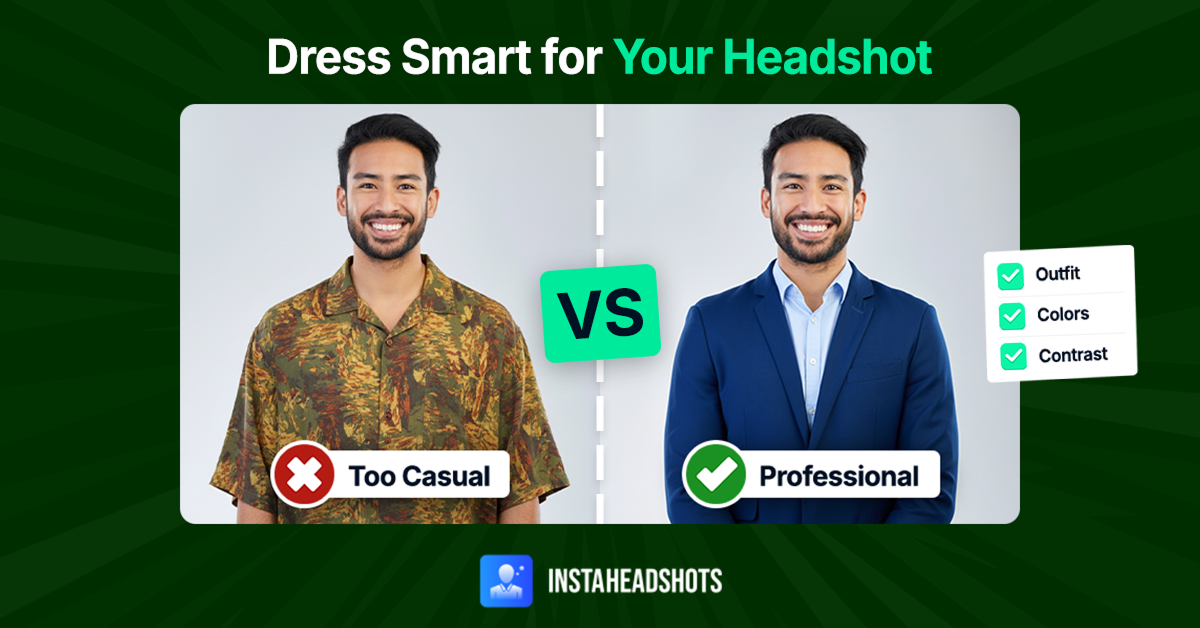
Dress with confidence: professional headshot outfit formulas that look sharp, credible, and camera-ready.
When you have a headshot session coming up, choosing what to wear can feel oddly high-stakes. People worry about colors washing them out, blending into the background, or picking something that doesn’t feel like them—especially when the photo will live on LinkedIn, company bios, real estate pages, or healthcare directories. The pressure to get it right is real.
You don’t need an all-black outfit or a stiff suit to look professional. Strong headshot wardrobe choices are rooted in clarity, contrast, and authenticity, not rigid formality. InstaHeadshots supports those choices by accurately preserving natural skin tone, hair texture, lighting, and fabric detail so your results look polished and true to life.
Here’s how to choose clothing that photographs well, feels like you, and supports the impression you want to make.
TL;DR: For a strong professional headshot, stick to solid mid-tone colors, clean necklines, and outfits that fit well without feeling restrictive. Prioritize what feels natural to you and suitable for your industry. Simple, well-fitted pieces usually deliver the most polished final image.
Key takeaways
- Your outfit should support your face, not compete with it. Fit, neckline, and contrast matter more than whatever’s “in style.”
- Mid-tones, jewel tones, and solid basics photograph better than pure black, pure white, or busy patterns.
- “Professional” doesn’t always mean “formal.” Choose pieces that reflect your industry, role, and use case.
- Simple, clean necklines frame the face well, while turtlenecks, deep necklines, and complex collars are higher risk.
- Good fit is essential: anything that pulls, gapes, or sags becomes more noticeable in a tight crop.
What professionals should consider before choosing an outfit
There’s no one-size-fits-all formula for choosing an outfit for your headshot photo. Your industry, how the image will be used, and what feels authentic to you will all play a role in what works best.
Here’s what to keep in mind:
- Your industry: Professional norms vary widely. A crisp blazer and button-down might be perfect for legal or financial roles, but the same outfit can read overly formal in tech, creative fields, or wellness. More stylized or fashion-forward looks that work for acting or modeling headshots don’t always translate to a business headshot. Choose pieces that reflect competence within your field.
- Headshot use case: Consider where the photo will appear. For a company website, choose something cohesive that aligns with brand colors. On social media or networking platforms, you can lean further into personal style and make choices that feel more expressive.
- Your personality and comfort level: Discomfort shows on camera. Pick pieces that help you look like your real-life self—confident, approachable, and relaxed. If a formal blouse doesn’t feel natural, swap it for a structured sweater or even a clean T-shirt that fits your everyday wardrobe while still looking polished.
What to wear for professional headshots
If you’re not sure where to start when planning an outfit for your business headshots, use these guidelines to build a clean, camera-ready look:
- Opt for solid colors: Patterns can distract from your face or appear distorted on camera. Solid tones keep the frame clean. Instead of pure black or pure white, try mid-range shades like navy, charcoal, emerald, plum, burgundy, or teal, especially in natural light.
- Use clean, simple necklines: Crew necks, V-necks, and boat necks create a neat frame around your face, while collared shirts remain a classic option for corporate headshots.
- Add blazers for structure: A well-fitted jacket instantly adds polish—ideal for headshots in finance, legal, or consulting fields.
- Layer dark colors over light colors: Layering adds depth without overpowering the frame. Pair dark colors in outerwear with light colors underneath. For example, a navy blazer over a slate-blue top. High-contrast combinations can also help you stand out in brighter studio lighting.
Fit and tailoring
An ill-fitting top becomes particularly noticeable in a headshot, since the tight crop amplifies small details. A blazer with sagging shoulders or a button-down that pulls across the chest can distort your silhouette and draw focus away from your face.
When selecting your outfit, look for fabrics that lie smoothly without bunching, sagging, or gaping. Steer clear of pieces that feel too tight; not only are they unflattering on camera, but they can also restrict movement and lead to a tense expression.
Necklines that photograph well
Certain necklines consistently work well for professional photos, and the best choice depends on the look you’re aiming for. To elongate your neck, skip turtlenecks and choose a V-neck or scoop neck that gives a subtle highlight to the collarbone. Just be sure the cut stays within professional standards—deep V-necks can read as too casual or out of place depending on your industry.
Crew necks and boat necks also photograph cleanly during a professional photo session. They’re simple, versatile, and flattering across many body types, and they offer a polished alternative to a traditional button-down if you prefer a more relaxed silhouette.
Best colors for headshots
The best color palette for your headshot depends on your skin tone and the lighting you’ll be photographed in. You’re not limited to black and white; soft neutrals, jewel tones, and even select pastels often look more flattering and still read as professional.
Soft neutrals like cream, light brown, and heather grey look refined in natural light. Under studio lighting, deeper jewel tones such as emerald, navy, or plum add contrast and help your features stand out.
When choosing colors, avoid shades that sit too close to your natural skin tone, since they can make you appear washed out. Instead, focus on hues that complement your undertones: earthy olive or terracotta red for warmer skin, and icy blue or soft pink for cool skin. If you’re unsure, taking a few test shots in different outfits and colors can be surprisingly helpful.
Colors also evoke different moods, which can shape how viewers perceive you. Bright, warm tones convey energy while softer pastels and neutrals feel calm and approachable. Either direction can work; it simply depends on the impression you want to make.
What women should wear for professional headshots
When selecting an outfit for professional headshots, think about your industry and the vibe you want to project. Blouses in silky or matte textures create an elegant, camera-friendly look, and wrap-style, scoopy, or boat neck silhouettes add subtle visual interest without competing with your expression. These styles work well across both corporate and creative roles.
Blazers and crisp button-downs offer more structure for women in legal, finance, or consulting positions, while soft-knit sweaters feel warm and approachable for healthcare or education settings.
Keep accessories minimal. Simple jewelry—like small studs or a delicate chain—adds a refined touch that complements rather than dominates the frame. For makeup, a matte base helps prevent glare, and natural eye and lip tones keep the look professional and true to life. Style your hair as you normally wear it at work; dramatic or experimental looks can feel inauthentic and out of place in a professional shot.
What men should wear for professional headshots
For men, headshot outfits should communicate professionalism without defaulting to overly formal choices. A blazer in navy, charcoal, or grey over a solid-colored shirt works well for corporate roles in law or finance. Senior leaders can add a tie if it aligns with their industry norms.
For tech or startup roles, you can skip the suit jacket and go for something more relaxed. A crewneck sweater in muted olive or navy is a reliable option for product managers or engineering teams. No matter your field, keep your hair clean and neatly groomed to support a sharp, credible look.
What to avoid wearing in headshots
Here’s what to steer clear of when selecting your headshot outfit:
- Bold patterns: Large or colorful designs pull focus from your face.
- Thin stripes: These often create a moiré effect on camera, making the photo appear distorted online.
- Bright colors and neons: Under studio lights, they can cast unwanted color onto your skin.
- Distracting accessories: Shiny or oversized jewelry competes with your neckline and expression.
- Loud logos: Prominent branding looks unprofessional and dates the image quickly.
- Shiny fabrics: Materials like satin or metallics produce glare and uneven shadows on camera.
How industry affects what you should wear
Your professional headshot outfit should reflect the expectations of your field. Use these industry-specific ideas to align your look with what hiring managers and clients expect to see:
- Legal and finance: Prioritize structure and professionalism with blazers, button-downs, and deep neutral tones. Keep accessories understated.
- Real estate: Choose jewel tones or other high-contrast colors to stand out in thumbnails or printed marketing materials.
- Healthcare or education: Soft mid-tones (like slate grey, sage, or light brown) paired with clean necklines create a calm, approachable look.
- Tech professionals: Elevated casual clothing, such as a sweater over a button-down, creates texture and presence while still matching the relaxed norms of tech roles.
- Creative professionals: There’s more room for personality, but avoid busy patterns that distract from your face. Opt for expressive textures or modern silhouettes instead.
How textures, fabrics, and accessories impact your photo
Fabrics matter as much as silhouette and color in headshots. Stick to matte materials over shiny ones, and avoid sequins, satin, or metallics, which can create glare under bright lighting.
Soft knits and natural fibers, like cotton, linen, wool, and silk, photograph especially well because they reflect light evenly and keep the focus on your face. Harsh synthetics, on the other hand, can look stiff or create unwanted sheen.
Realistic AI tools like InstaHeadshots preserve true fabric texture, preventing the plasticky or overly smooth look that some generators produce.
How AI handles outfits—and why realism matters
Many AI tools over-smooth faces, misinterpret fabrics, or distort colors. InstaHeadshots takes a different approach. Its models are trained on diverse, real-world inputs and use your real-life photos as the foundation, preserving details that matter in a professional headshot, including:
- Natural skin tone, freckles, and fine lines
- True fabric texture that resembles what you’d actually wear
- Accurate lighting and shadow placement
For something as important as a professional headshot, realism isn’t optional. InstaHeadshots is designed to produce results that look like real photos, not novelty filters, so your image stays credible across LinkedIn, company bios, and industry platforms.
Wear what flatters your face, not overshadows it
The right headshot outfit doesn’t need to be a stuffy suit, especially if that’s not how you normally show up at work. Aim for something clean, well-fitted, and true to your style. When you’re comfortable, your confidence reads instantly on camera, helping you make a strong first impression wherever your headshot appears.
InstaHeadshots produces studio-grade results with outfits that look realistic and appropriate for your industry, whether that’s a simple sweater, a collared shirt, or a classic blazer. It helps you present your best professional self without the scheduling or cost of an in-person photo shoot.
Try InstaHeadshots today to get classic, professional headshots with true-to-life outfit choices—ready in just 15 minutes.
FAQs
What colors look best for professional headshots?Mid-tones and jewel tones like navy, plum, emerald, charcoal, and soft teal consistently photograph well because they create clean contrast without washing out the skin.
Can I wear black or white in a headshot?Yes, but they’re higher risk. Pure white can disappear into bright backgrounds, and pure black can collapse detail unless lighting is carefully balanced.
What neckline is most flattering for a headshot?Modest V-necks, crew necks, square, and boat necklines tend to photograph best because they frame the face without competing with it.
Should I wear patterns?Avoid small or tight patterns—they can create moiré distortion online. Stick with solids or subtle textures for the safest results.
How do I choose an outfit if I’m using AI headshots?Use the same colors and fits you’d wear in real life. High-quality AI tools preserve fabric detail, skin texture, and color accuracy, so simple, well-fitting pieces translate best.