
Do You Need a White Coat for Your ERAS Photo? I Dug Into the Actual Rules
No, you don't need a white coat for your ERAS photo. I researched the AAMC rules and found no such requirement. Here's what actually matters for your headshot.

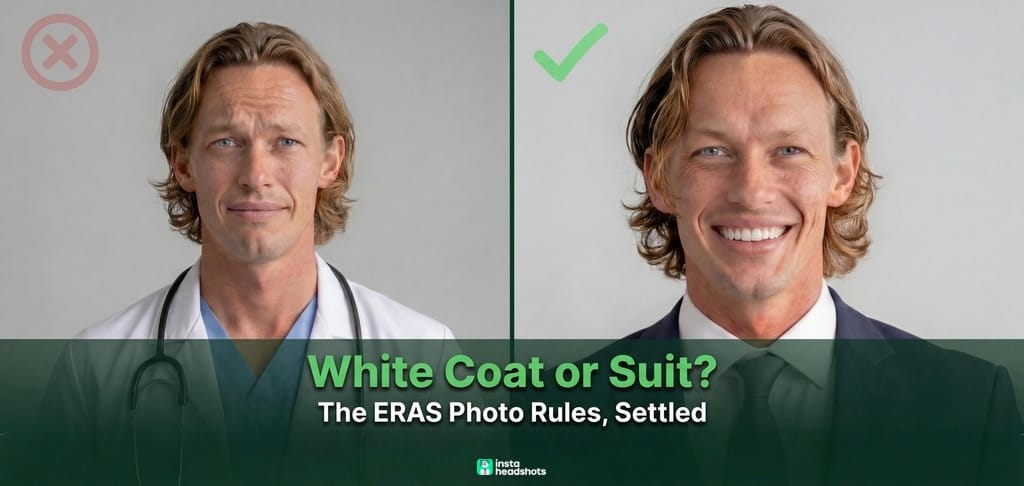
A friend applying to residency texted me last summer, close to panic. Her advisor said she needed a white coat photo. Her upperclassmen said skip it. Reddit said the coat was a red flag.
So she did what any stressed applicant does. She asked the guy who can't make a decision without pulling the data first.
I went down a rabbit hole on this, and the data surprised me. I read the actual AAMC requirements, the specialty photographer guides, and even a peer-reviewed study on how photos affect interviews. The white coat "rule" everyone stresses about? It doesn't exist in any official document. Not one.
Whether you're a US med student or an IMG trying to avoid a costly mistake, here's exactly what I found and what actually matters for your ERAS photo.
The Short Answer: No, You Do Not Need a White Coat
Let me give you the crisp answer first. The AAMC does not require, recommend, or even mention a white coat for your ERAS photo.
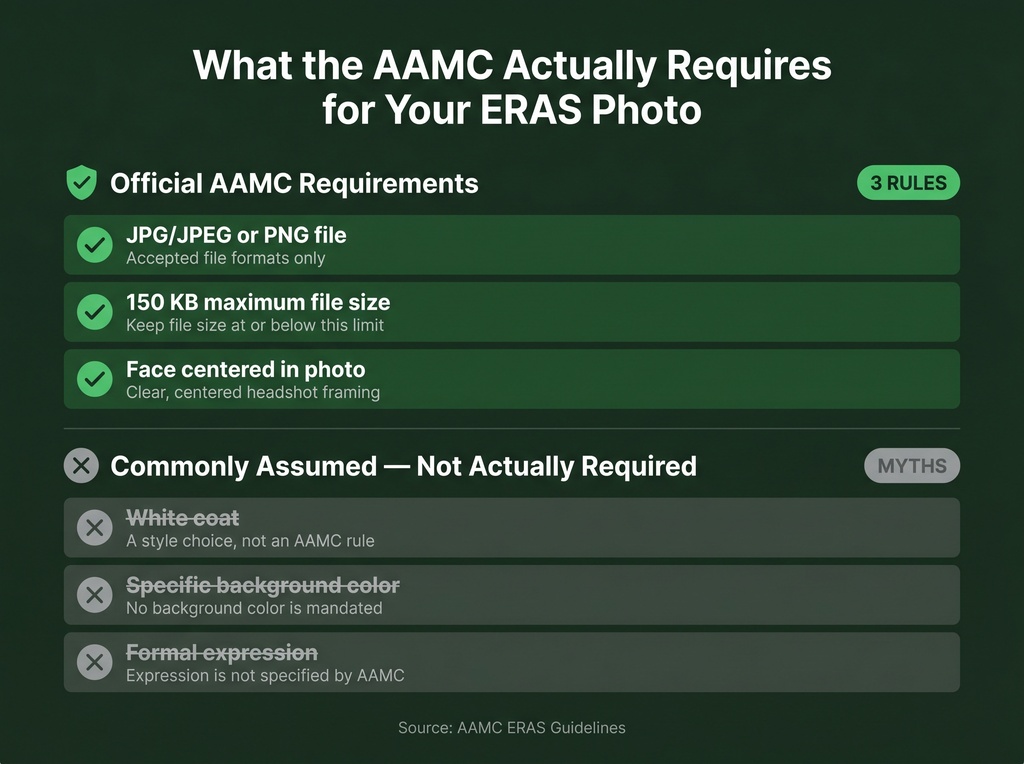
I pulled the official AAMC Photo page and read it line by line. Here's the entire list of what they actually require:
- File type: JPG/JPEG or PNG
- Maximum file size: 150 KB
- Face is centered in the photo
That's it. No mention of clothing. No mention of a coat. No mention of background color, expression, or attire of any kind.
The AAMC's documents page adds one useful detail. The photo is "most often used by programs to help identify applicants when reporting for an interview." In other words, it's an ID tool. Its job is to help someone recognize you at check-in.
So here's my takeaway. The white coat isn't a compliance question. It's a style choice. And when I looked at what the pros recommend, most of them say skip the coat entirely.
What the Specialty Photographers Actually Recommend
Here's the part that surprised me. I assumed the professionals would be split on the coat. They're not. The 2024 to 2026 photographer consensus is clear: skip it.
I was skeptical too, until I looked at the quotes.
One widely cited ERAS headshot guide puts it bluntly: "DON'T wear a white coat. Whatever you do, don't wear a white coat in your medical residency photo."
A St. Louis photographer who shoots for several medical schools explains the nuance in his 2026-2027 requirements guide. A short white coat "can read as presumptuous to some program directors if you are not yet an attending." His conclusion: "the suit jacket alone is the safer call."
Another studio's photo tips post agrees: "Avoid wearing your white coat for your ERAS photo. This is generally discouraged for your primary photo."
When I broke this down, a pattern emerged. Every major guide I found from 2024 to 2026 either discourages the coat or calls it optional. None of them recommend wearing one. That's a strong signal.
What About IMGs? The Advice Is the Same
If you're an international medical graduate, you might wonder if the rules are different for you. They're not.
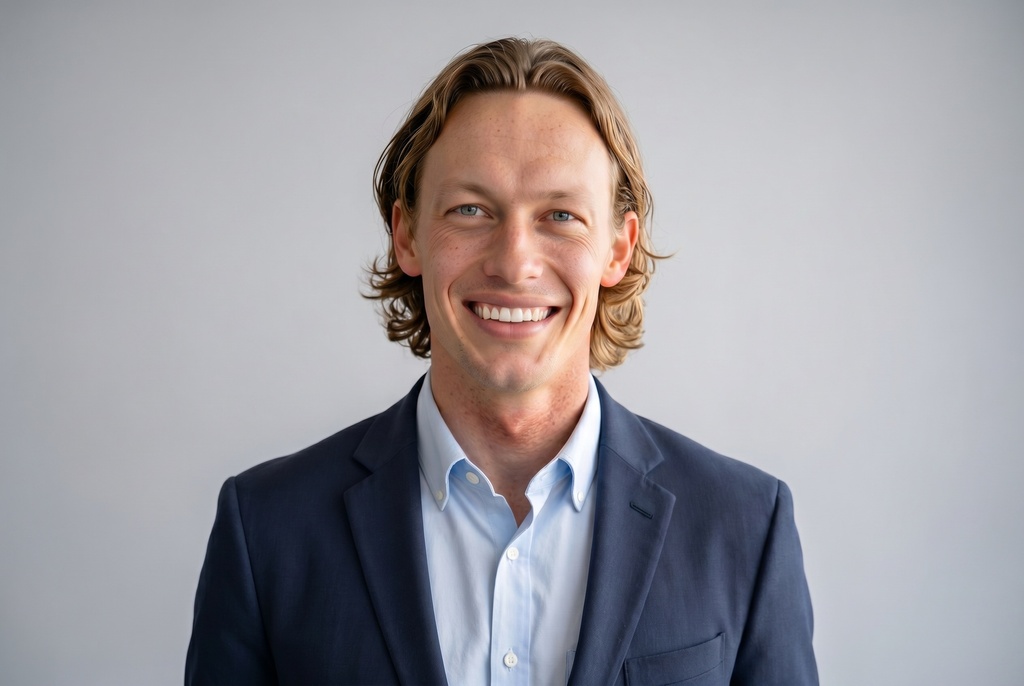
The IMG-facing ERAS photo guidelines from October 2025 state it directly: "White coats are not standard practice for ERAS photos." They recommend "business formal, such as a shirt and tie or a blazer over a button-down shirt or blouse."
There's one operational difference for IMGs worth knowing. You don't upload the photo yourself. The ECFMG, now branded MyIntealth, uploads it into the ERAS system for you.
The technical specs are identical to what US grads use: "The maximum file size accepted is 150 KB. It must be no larger than 2.5 by 3.5 inches (i.e., passport size)."
So my advice for IMGs is simple. Send ECFMG a clean, business-formal file well ahead of the deadline. Same specs, same attire logic, one extra handoff step.
Does the Photo Even Affect Your Match?
This was the question I really wanted to answer. If the photo doesn't matter, why stress at all? And if it does matter, does the coat move the needle?
The research here is actually fascinating. A 2020 study in the journal Surgery looked at over 800 surgical residency applications across two cycles. The researchers found that photo scores were a positive predictor of getting an interview invitation. The odds ratio was about 2.3 in both years.
So the photo does matter. But okay, here's where it gets interesting.
The raters scored photos on visual appearance, perceived fitness, and professionalism. The effect even held when reviewers were blinded, suggesting the photo works as a proxy for traits like work ethic. And the paper referenced a separate dermatology study finding that applicants who wore suit jackets were more likely to match.
Read that again. Suit jackets, not white coats, were the attire signal linked to matching.
A more recent retrospective study covered in our ERAS photo guide analyzed 2,681 applications across 10 specialties. Each extra point of "attractiveness" was tied to a 19% higher interview likelihood. But that link vanished once researchers controlled for USMLE scores and experience.
Here's my read on all of it. The photo is not zero-stakes. But the lever is "looks polished and professional," not "wears a white coat." Spending $400 or borrowing a coat won't move a 220 Step 2 score to a 250.
What Actually Gets ERAS Photos Rejected
Let me nerd out on this for a second, because this is where applicants misplace their anxiety.
I pulled the common rejection reasons from multiple 2025 and 2026 guides. Not one of them lists white coats. The problems are technical and stylistic, not sartorial.
Here's what actually gets photos flagged or rejected:
| Rejection Reason | Why It Happens |
|---|---|
| File over 150 KB | Exceeds the AAMC hard limit |
| Wrong dimensions | Not the 2.5 x 3.5 inch passport crop |
| Wrong file format | HEIC from iPhones, which AAMC doesn't accept |
| Distracting background | People, objects, or strong patterns behind you |
| Poor lighting | Harsh shadows, overexposure, or side-lit squinting |
| Casual attire | T-shirts, bold graphics, wrinkled clothing |
| Forced expression | Over-retouched or unnatural look |
| Unassigned photo | Uploaded but not assigned in MyERAS |
Notice the pattern. The white coat never appears. The real risks are file size, dimensions, format, and lighting.
The binding technical spec across every source I checked is consistent: 2.5 x 3.5 inches, 150 DPI, which works out to 375 x 525 pixels, JPEG or PNG, under 150 KB. Get that right first. That's what actually gets photos rejected. Our free ERAS Photo Checker verifies all of that before you upload.
Business Formal: What to Actually Wear
So if the coat is out, what's in? Business formal. And it doesn't have to be stiff or expensive.
A blazer over a collared shirt reads more formally in a headshot than a white coat does. For men, a suit jacket with a shirt and tie works. For women, a blazer over a blouse or a professional top does the job.
Attire in doctor headshots is a stylistic choice, not a fixed requirement, as I explored in our guide on doctor headshot attire. Business attire projects the same professionalism a coat would, without the "aspirational doctor" optics.
A few practical tips from my research:
- Pick solid mid-tones or jewel tones over pure black or busy patterns
- Avoid shiny fabrics that bounce light and wash you out
- Make sure the fit is clean, since a tight crop shows every gap and sag
- Keep the background plain and light for clean separation
As a portrait photography hobbyist, I'll add one thing. Contrast between your outfit and the background matters more than formality. A navy blazer against a light gray backdrop sharpens your jawline. The same navy against dark charcoal turns into a murky blob.
And here's a coherence tip I loved from one photographer. Optimize for a photo you can replicate on interview day. One program director told him that big discrepancies between the ERAS photo and the person who shows up "raise a flag." If you wouldn't wear a white coat to your interview, don't wear one in the photo.
How Much Should You Spend? Probably Less Than You Think
Here's the good news for your budget during an already expensive season. The compliance bar is low enough that money is not a real barrier.
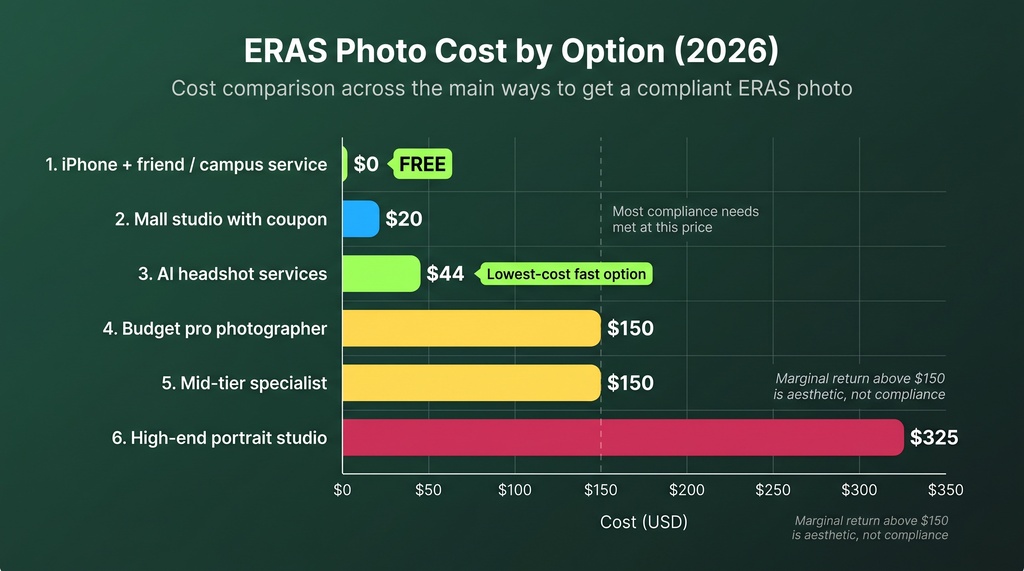
I pulled the cost data and segmented it by tier. The range is wide.
| Option | Approximate Cost | Notes |
|---|---|---|
| iPhone plus a friend, plain wall | $0 | Reddit applicants reported doing this and passing |
| Campus career services | Free | Some schools offer free digital headshots |
| Mall studio with a coupon | ~$20 | JCPenney-with-Groupon sessions |
| AI headshot services | $19 to $44 | Fast, but watch the authenticity tradeoff |
| Budget pro photographer | $50 to $150 | Solid quality, days of turnaround |
| Mid-tier specialist | $125 to $150 | ERAS-focused studios |
| High-end portrait studio | $325+ | Mostly aesthetic, not compliance |
Applicants reported spending as little as $0 to $200 using everything from iPhones to professional studios. One person paid roughly $20 at a mall studio with a coupon and got a fully compliant photo.
My honest read: the marginal return above $150 is mostly aesthetic, not compliance. You do not need to spend hundreds to meet the bar.
A Note on AI Headshots
AI headshot tools are the cheapest fast option. Services like InstaHeadshots can generate polished, medical-specific looks in as little as 15 minutes for $49 to $69, compared to spending $300 and half a day at a studio.
But I'll be honest about the tradeoff. The 2026 photographer consensus warns against AI-generated images for the primary ERAS photo. One program director said applicants should look like "a real person," not a glamour shot or an AI image. And remember that coherence point: reviewers can compare your photo to the real you at check-in.
My take: AI headshots are great for LinkedIn, your hospital profile, and low-stakes professional use. For the actual ERAS submission, a clean real photo or a careful DIY setup carries less interview-day risk. Use the right tool for the right job.
The Bottom Line
The white coat is a myth, not a rule. I went looking for the requirement everyone stresses about, and it simply isn't in any AAMC, ECFMG, or NRMP document.
Here's what I'd do if I were applying:
- Wear business formal: a blazer or suit jacket over a collared shirt or blouse
- Skip the white coat and definitely skip scrubs, even for surgical specialties
- Nail the technical specs: 2.5 x 3.5 inches, 150 DPI, JPEG or PNG, under 150 KB
- Use a plain, light background and natural lighting
- Spend $0 to $150, not $400
- Save your real energy for Step scores, letters, and interview prep
You don't run a marathon by obsessing over your shoelaces at mile one. The photo is a low-leverage part of your application. Meet the bar cleanly, then redirect that anxiety toward the things that actually move the match.
No coat required. Go get your file at exactly 150 KB and move on.