What an ERAS Headshot Costs (And What You Should Actually Pay)
An ERAS headshot can cost $0 to $1,500+. Here's the full price breakdown and why budget and AI options meet the specs just fine in 2026.

One studio quoted a student $300 for an ERAS photo. Another applicant paid $19 for an AI version that passed on the first upload. Same requirement. Same result. Wildly different price.
I dug into this because the pricing made no sense to me. I run marketing for AI imaging tools, so I read spec sheets and price tables for a living. What I found is that ERAS headshot pricing has almost nothing to do with whether your photo gets accepted.
You're already bleeding money on exam fees, program fees, and interview travel. The last thing you need is to overpay for a formality. So let me save you a few hundred dollars.
Here's the full price spectrum, what each tier actually buys, and how to pick the cheapest option that still looks clean.
The Short Answer: $0 to $1,500+, But Aim for $15 to $60
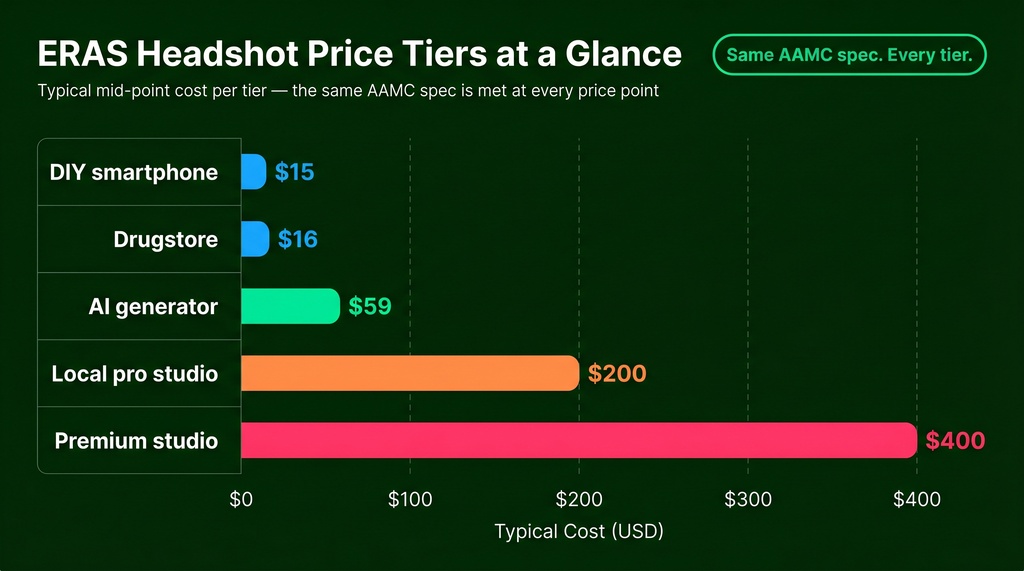
An ERAS headshot can cost anywhere from $0 to over $1,500. But most applicants should spend $15 to $60. That's the honest range.
Here's the full spectrum I mapped out:
| Tier | Price Range | What You Get |
|---|---|---|
| DIY smartphone | $0 to $30 | One digital photo you shoot and crop yourself |
| Drugstore / shipping store | $11.99 to $17.99 | In-store passport-style photo, same day |
| AI headshot generator | $9.99 to $79 | Dozens of polished composites in minutes |
| Local professional studio | $125 to $250 | One in-person session, retouched file |
| Premium specialty studio | $295 to $1,500+ | Coaching, same-day delivery, concierge service |
The key thing: the same AAMC spec is met across every single tier. A $15 drugstore photo and a $1,500 studio photo both pass the exact same automated check.
So overspending here is an aesthetic luxury, not a lever. This is a systems issue, and the system does not reward a bigger photo budget.
What the ERAS Photo Actually Has to Do
Before we talk money, understand the job. The photo is a compliance item, not a personal brand showpiece.
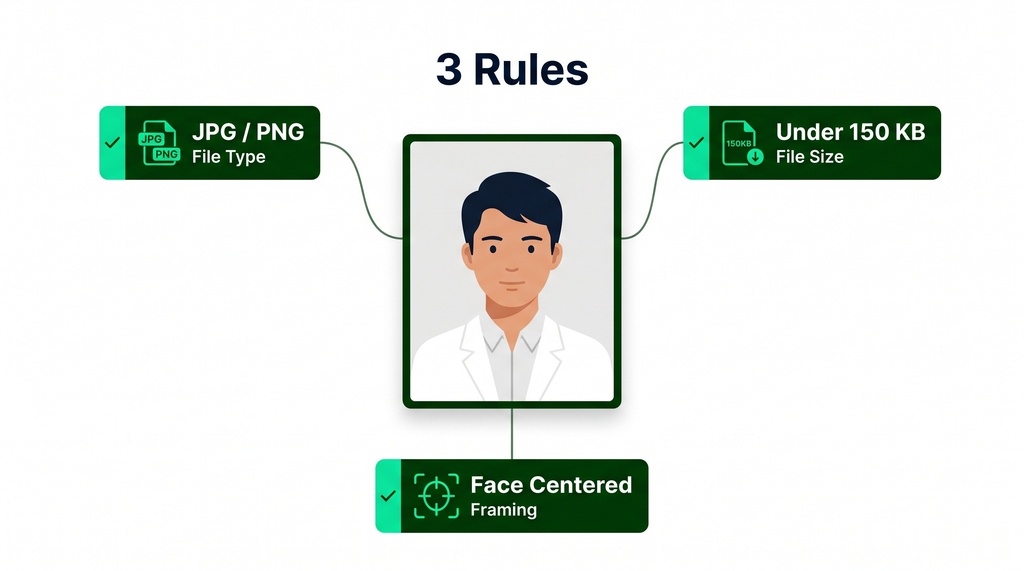
The AAMC user guide lists only three hard rules:
- File type: JPG, JPEG, or PNG
- Maximum file size: 150 KB
- Face centered in the photo
That's it. Those are the only mandatory items the AAMC actually renders as rules.
Everything else is community norm. The full de-facto spec, reproduced by photographers and med schools, is 375 x 525 pixels at 150 DPI (the same 2.5 x 3.5 inch passport ratio), a solid neutral background, and business-formal attire. I break the full technical detail down in our ERAS photo specs guide.
Constraints create clarity. Once you see the spec is this narrow, the pricing panic disappears. You are not buying art. You are buying compliance.
And there's no official dress code either. Every guide I checked recommends a navy or charcoal blazer over a light shirt, but that's consensus, not law. A suit you already own works fine.
Does a More Expensive Photo Get You More Interviews?
No. There is no published evidence that a pricier photo helps you match.
The clearest statement I found comes from IMGPrep's October 2025 guidance: "There is no published evidence that the photo influences ranking decisions in the way that scores, letters, or interviews do."
The same source calls the photo "invisible work." It "does not advance an application, but it removes one source of unconscious negative signal."
Read that again. Spending more than the minimum buys you "no negative signal," not "positive signal." Those are very different things.
A 2026 retrospective study in JMIR Medical Education backs this up. It analyzed 2,681 applications across 10 specialties. Each extra point of "attractiveness" looked tied to a 19% higher interview chance, but that link disappeared once you controlled for demographics, experience, and USMLE scores. I cover this study in more depth in our ERAS photo guide.
Here's the mechanism. Program directors process hundreds of applications per cycle. A bad photo introduces friction at the moment of first impression. A great photo does not flip a selection outcome. Your scores, letters, and interviews carry the weight.
So the risk is bounded. Getting the photo wrong costs you a little. Paying $300 for a marginally prettier photo buys you nothing you can measure.
Why the Photo Is Roughly 1% of Your Application Budget
Let me put the photo in context. Because that's where the real argument lives.
According to the AAMC cost page, a typical applicant faces:
- ERAS fees: $11 per program for the first 30, then $30 each after
- USMLE transcript: $70
- COMLEX transcript: $80
- NRMP registration: $85
Apply to 50 programs and your ERAS fees alone hit around $930. Then add interview travel, which advisory firms estimate at $1,000 to $5,000 or more.
If you're an international medical graduate, it's worse. The ECFMG fee stack adds a separate pre-ERAS layer: $580 for certification, $185 for the ERAS token, $110 for a MyIntealth account, and $220 for credential verification.
That certification and token alone ($765) costs more than the most expensive in-person studio session I found.
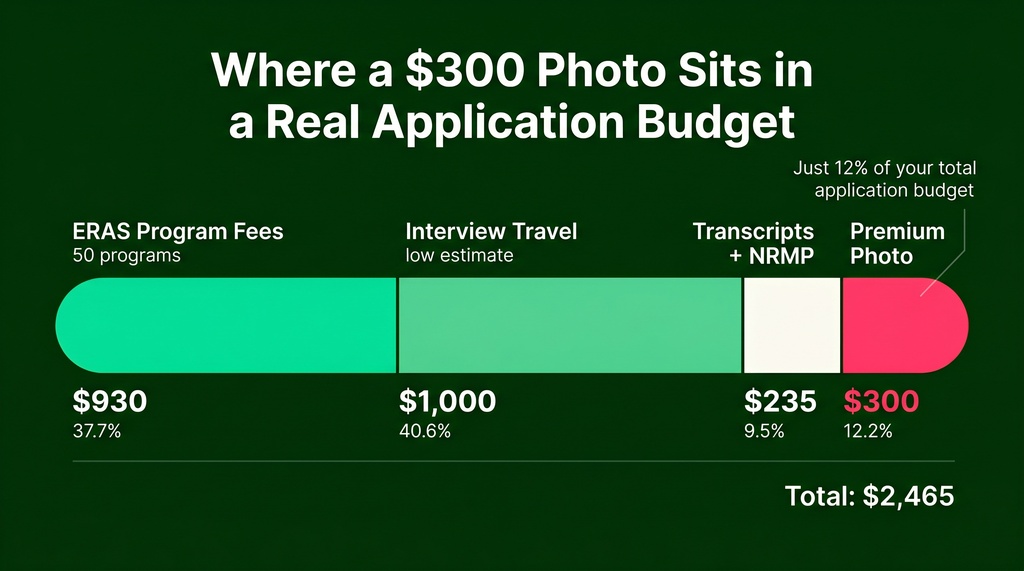
So a $300 photo is roughly one interview-travel night. A $49 AI photo is roughly the cost of two MSPE copies. Leverage beats effort. Put your dollars where they move match probability: more programs and more interviews.
Tier by Tier: What Each Price Actually Buys
Drugstore and Shipping Stores ($11.99 to $17.99)
This is the honest cheapest reliable path. According to passport photo pricing data, Walgreens charges $14.99, CVS charges $17.99, USPS runs $15, and the UPS Store starts at $11.99.
These produce 2x2 government-compliant photos. That's the same 1.43 aspect ratio as ERAS. A quick crop lands it. Wear a blazer, stand against the store's white wall, and you're done in five minutes with zero booking lead time.
The trade-off: it reads as "passport-tier," not "executive-tier." Flat lighting, limited poses. It's spec-compliant but not polished.
AI Headshot Generators ($9.99 to $79)
This is where the market got interesting. AI headshot services now start below drugstore prices and land well under studio minimums.
You upload a set of selfies. The AI produces passport-style composites with controlled background and lighting. Then you crop to 375 x 525 pixels and compress under 150 KB in any free tool. That takes about 60 seconds.
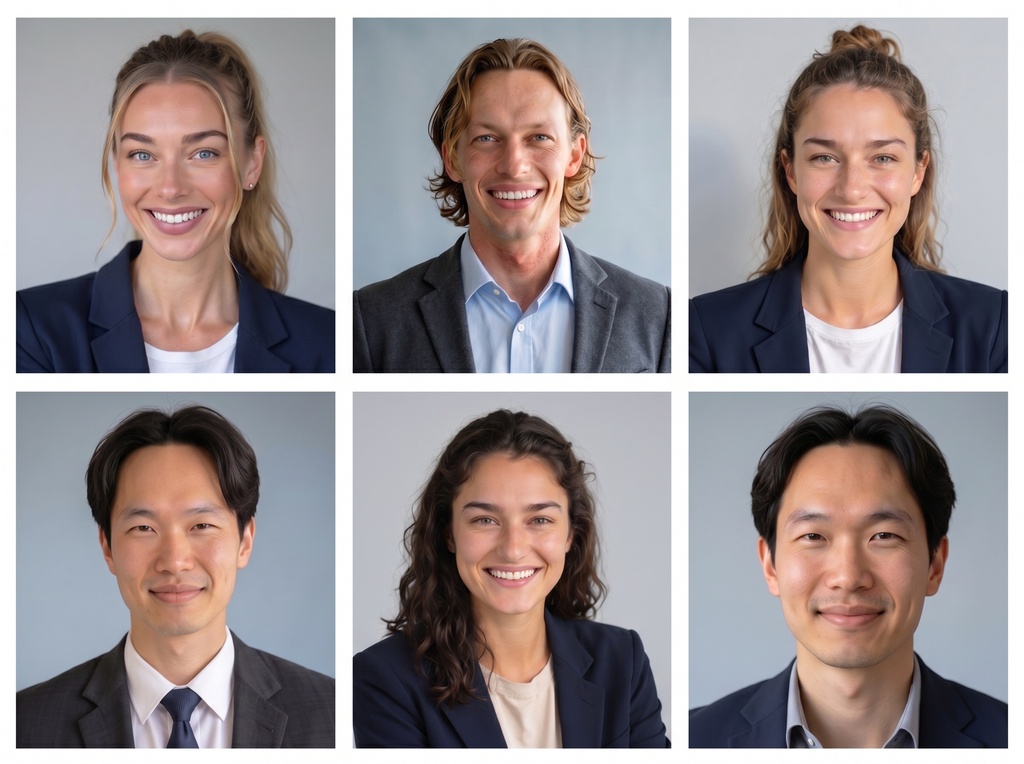
One fair warning: "free" AI is rarely free. As we found when we ran the numbers, free tools cap you at 1 to 5 low-resolution images with watermarks. The real cost shows up as resolution and your own time. The paid conversion point tends to sit around $49.
That's why the $49 to $69 AI tier is the sweet spot. More polish than a drugstore photo, far cheaper than a studio.
Instaheadshots sits right here. The Starter plan is $49 for 40 HD headshots in about 90 minutes. The Basic plan is $59 for 100 headshots. Since ERAS needs exactly one compliant JPEG, generating 40 to 100 options gives you real margin. There's a money-back guarantee too, which matters because AI output quality varies with your input selfies.
Honest note: AI works great for most applicants. If you want a human reading your face and adjusting angles in real time, that's a studio, not an algorithm.
Local Professional Studios ($125 to $250)
A local pro gives you a single in-person session and a retouched file. Documented examples run from $125 at a St. Petersburg studio to $200 at a Washington DC studio to $225+ in LA.
On Reddit, students in the "Cost of ERAS headshots" thread report paying "$150 at a professional studio in NYC" and "$175 and it was 100% worth it." All positive sentiment. No evidence of a higher match rate.
This tier is rational if you dislike AI, want a guaranteed in-person session, and $150 to $250 fits without crowding out travel dollars.
Premium Specialty Studios ($295 to $1,500+)
The high end adds coaching, same-day delivery, and concierge service. A Houston studio charges $295 flat with one-hour delivery. Another photographer starts at $325.
These studios sell time, expertise, and convenience. They do not sell better AAMC-spec compliance. A blurry $400 photo fails more submissions than a crisp $15 one.
And remember, headshot pricing is heavily location-driven. Our city-by-city cost breakdown found the same package quoted at $425 in Austin versus $175 in Phoenix. Your zip code often matters more than photographer skill.
My Decision Framework for a Cash-Strapped Applicant
Here's the exact order I'd work through. Don't scale what you haven't stabilized: prove you can't meet specs cheaply before you spend more.
- Anchor the photo as under 5% of your total spend. Your real budget is programs, transcripts, and travel.
- Try the lower tiers first. Free DIY if you have a friend with a camera and a plain wall. $15 to $18 at a drugstore if you want physical verification. $49 to $69 for an AI pack if you want polish without leaving home.
- Escalate only on aesthetic preference. If your cheap photo looks noticeably worse than your peers', move up one tier.
- Escalate further only on time or service. Mid-rotation with no spare 30 minutes and the budget to spare? A $125 to $250 studio session is fair. Two weeks out and you want coaching plus same-day delivery? The $295 tier earns its keep.
- Never jump a tier without proving you can't meet specs below it.
The Three Compliance Checks That Actually Matter
Regardless of tier, spec compliance beats tier choice every time. Before you submit, verify:
- File compliance: JPEG or PNG, under 150 KB, 375 x 525 pixels, face centered.
- Background compliance: solid neutral white, light gray, or light blue. No patterns, no clutter.
- Attire compliance: business-formal, solid colors, no stripes or plaids.
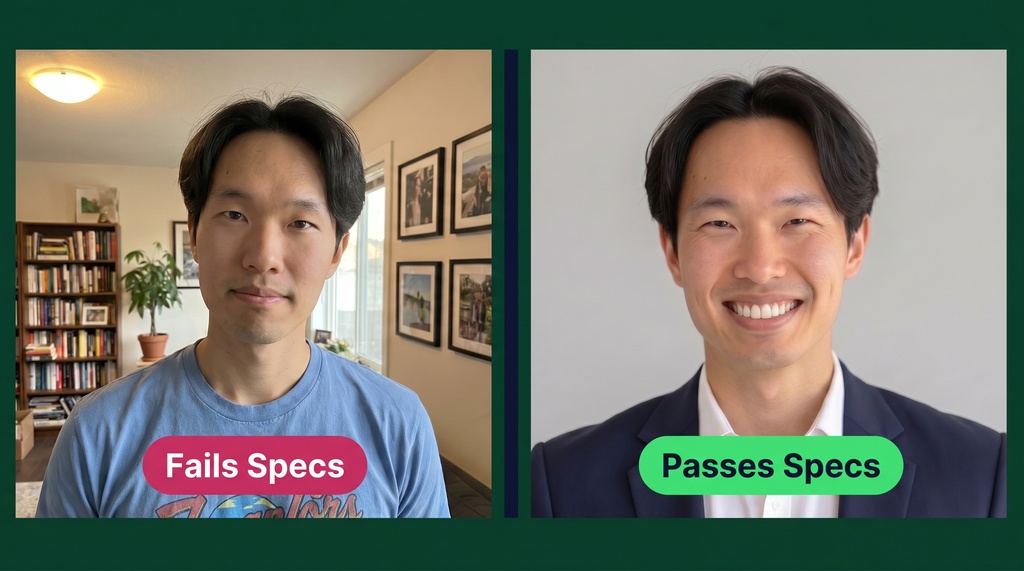
Most "ERAS photo problems" are boring technical mismatches, not quality issues. Wrong dimensions. Oversized files. A bad filename. Any AI or drugstore output needs at most a one-minute tweak to bring the file size in line. Our free ERAS Photo Checker flags those mismatches in seconds, before you upload.
The Bottom Line
Here's what I'd tell a friend applying this cycle. The buck stops with you on this decision, so make it a calm one.
An ERAS headshot can cost anywhere from under $20 to $300 or more. But cost is not the point. Meeting the specs and looking clean is the point.
The photo is invisible work. It removes a negative signal, nothing more. It cannot recover a weak USMLE score, and it will not win you an interview on its own.
So default to the cheapest spec-compliant option you're not embarrassed by. For most people that's a $15 drugstore photo or a $49 to $69 AI pack. Then take the hundreds you just saved and spend them on more programs and more interview travel, which are the line items that actually move your match.
Spend the minimum to look professional. Redirect the rest to where it counts.